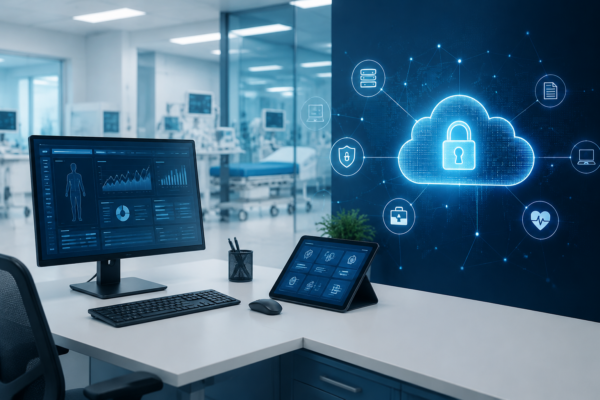
Healthcare organizations often know their technology needs improvement long before a modernization project begins. Aging workstations, inconsistent security controls, unsupported applications, fragmented networks, and manual workflows can gradually become part of daily operations. The challenge is correcting those problems without interrupting patient care.
A successful modernization program is not a single technology purchase. It is a phased effort that strengthens security, improves reliability, and gives staff better tools while protecting clinical operations.
Start with an operational and technology assessment
Before changing systems, document how the organization currently works. Inventory devices, operating systems, applications, network equipment, printers, scanners, medical peripherals, cloud services, user accounts, and vendors. Map which departments and clinical processes depend on each system.
This assessment should also identify unsupported software, shared credentials, unencrypted devices, missing backups, inconsistent patching, unmanaged endpoints, and single points of failure. Prioritizing findings by operational impact and security risk creates a practical roadmap.
Protect identities before expanding access
Identity is one of the most important layers of healthcare security. Require multifactor authentication, remove unnecessary administrator access, establish role-based permissions, and standardize onboarding and offboarding. Shared workstations and clinical devices require special planning so staff can work efficiently without weakening accountability.
Standardize endpoint management
Centralized device management helps IT apply security policies consistently. Organizations should establish standards for supported operating systems, encryption, endpoint protection, patching, screen-lock settings, software deployment, and device compliance. A documented replacement lifecycle prevents old devices from becoming permanent exceptions.
Modernize networks in phases
Clinical operations depend on reliable connectivity. Network modernization may include managed firewalls, business-grade switching, secure wireless access, network segmentation, monitoring, documented cabling, and secondary internet connectivity. Guest devices, medical equipment, cameras, and business workstations should not automatically share the same network access.
Changes should be scheduled by location or department, with tested configurations and rollback procedures. This limits the effect of unexpected vendor or application issues.
Validate clinical applications and peripherals
Healthcare environments frequently depend on specialized integrations: EHR components, dictation software, scanners, EKG systems, label printers, imaging tools, and vendor portals. A device may meet general IT requirements while still being incompatible with a clinical workflow.
Testing should include actual users and real workflows. Confirm application access, printing, scanning, dictation, data exchange, and peripheral connectivity before deploying changes broadly.
Improve resilience and recovery
Backups must be monitored, protected from unauthorized access, and tested for recovery. Document how the organization would continue operating during an internet outage, application failure, cybersecurity incident, or facility disruption. Business continuity planning should address both technology recovery and the temporary workflows staff will use while systems are unavailable.
Communicate with staff throughout the project
Technology changes fail when employees are surprised or unsupported. Explain what is changing, why it matters, when it will occur, and where users should request help. Department champions can help test workflows, identify issues, and encourage adoption.
Modernization should be measurable
Track improvements such as supported-device coverage, encryption, multifactor-authentication adoption, patch compliance, ticket volume, outage frequency, recovery testing, and user satisfaction. These measures show whether the program is reducing risk and improving operations.
Stratigere helps healthcare organizations standardize, secure, and simplify their technology environments. Contact us to discuss an assessment or phased modernization plan.